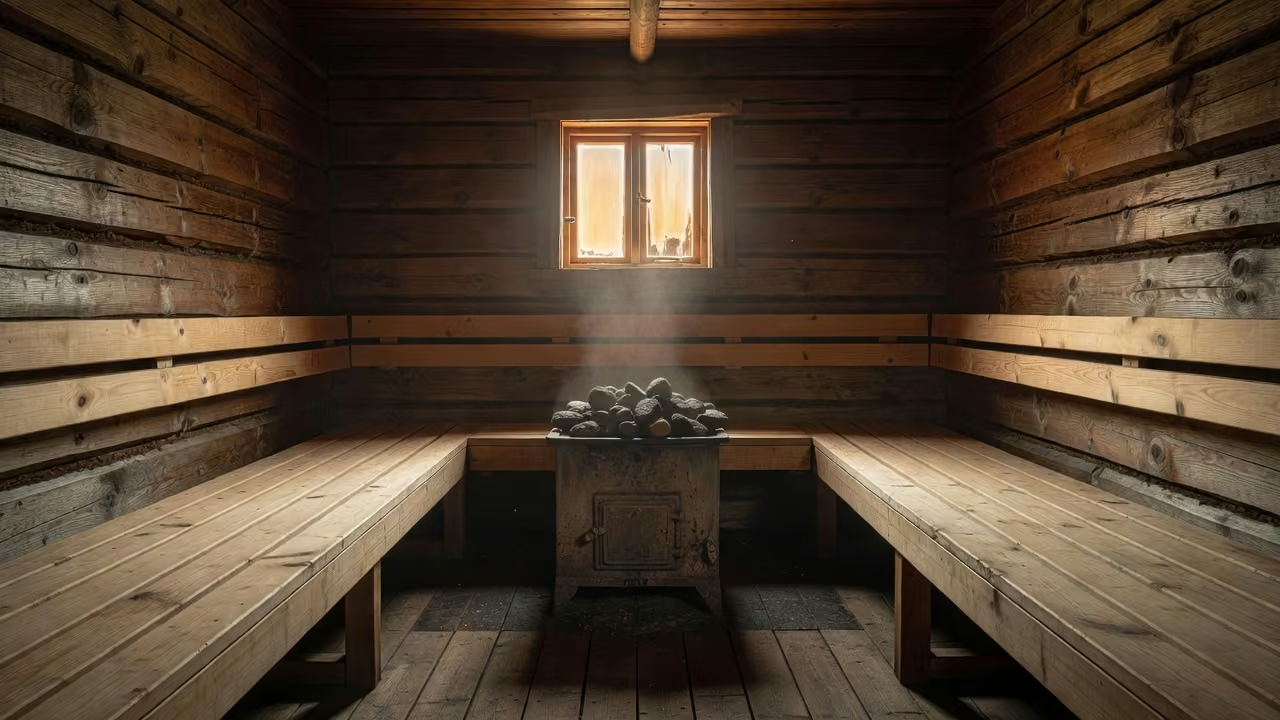
To the earliest Finns the sauna was more than a bathhouse: it was a place with its own spirits, its own rules and a sanctity that set it apart from ordinary rooms. That belief left deep marks in folk poetry and in the Kalevala, the national epic assembled from old oral verses.
A sacred place
A space with its own spirits
Finnish folk tradition held that every sauna had a guardian, often called the saunatonttu — a household spirit who looked after the sauna and expected to be treated with respect. Because the sauna was a private, intimate room, people believed entering it demanded quiet and good manners, lest the guardian take offence.
The sauna in the Kalevala
Bathing, healing and the hearth of the heroes
In the Kalevala the sauna appears as a practical and almost ceremonial place where heroes wash, rest and recover. Its repeated role as the warm, feminine heart of the household reflects how the real sauna functioned — the place a family used for cleansing and for refuge.
Guards and spirits
Beware the sauna's daemon
Songs and charms name the sauna's own daemon of heat — a spirit of the hot room that the bather was advised not to trouble. Riddles, spells and blessings around the sauna all treated the heat and the stones as alive in some sense, deserving of respect rather than mere control.
A place apart
Between the everyday and the otherworld
Across Finnish folklore the sauna sat on the boundary between the ordinary and the unseen. It was the right place for certain remedies, for quiet reflection, and for rituals that could not properly be held in the house — the root of its later, well-documented links to birth, illness and the winter festivals.