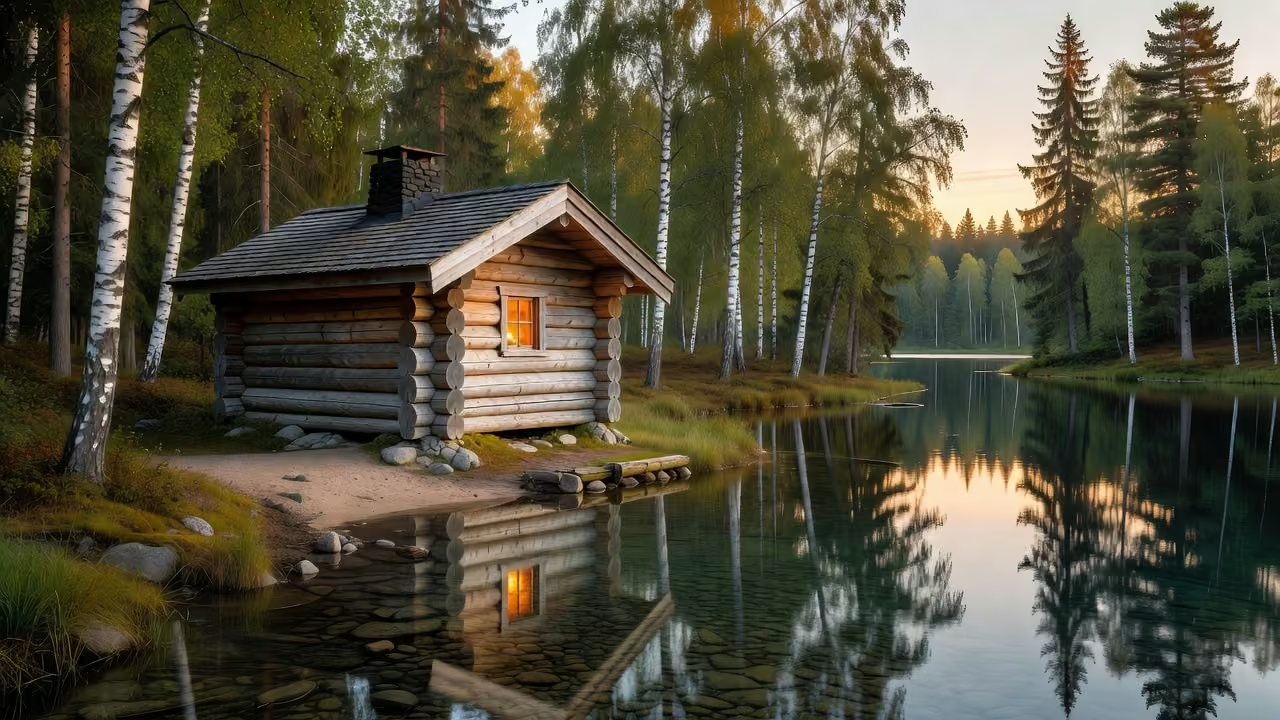
Long after it ceased to be a temple, the sauna kept a quiet sacredness. Finland's history treats the sauna as the most private and most respected room of the home — a place apart, used for the most serious moments of life, from the Christmas wash to the customs around birth and death.
A place apart
Closer to tradition than to theology
The sauna's sanctity was practical and folk-like rather than church doctrine. It was the one room a stranger would not casually enter, the room where the household washed its troubles off and gathered its calm. That special status is why it hosted so many ceremonial moments.
The Christmas sauna
A wash before the holy evening
In Finnish tradition the sauna was heated on Christmas Eve so the whole family could wash and dress cleanly before the holiday's quiet high point. For many the Christmas sauna remains a fixed, cherished ritual — a moment of calm and cleanliness that opens the night.
At life's milestones
Birth, marriage and the final wash
The sauna attended the great turns of life: children were welcomed into it at birth, brides sometimes washed and prepared in it, and in older custom the body of the deceased was washed in a dissolved sauna before burial. It was the room where a person was cleaned at either end of life.
Faith and the sauna
No conflict, only custom
The Christian church generally tolerated and even absorbed the sauna's small rituals rather than suppressing them. The result is a characteristically Finnish blend: a room that is deeply traditional and quietly reverent without ever quite being a religious or church place.