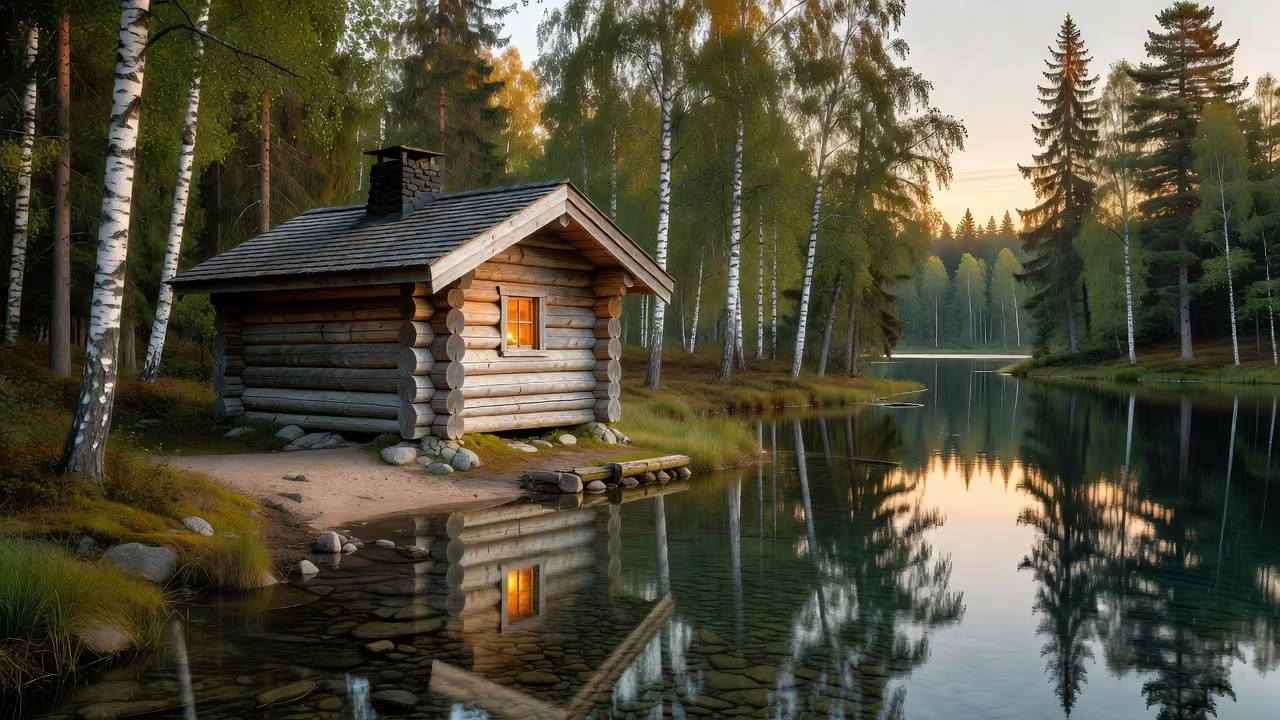
For centuries, when a child was born in rural Finland, the room chosen for the birth was very often the sauna. Warm, private, easily heated and easy to keep clean, the sauna served as a dedicated birthing place — a practice so common that it shaped how Finns thought about both the sauna and the beginning of life.
The warmest room
Why the sauna of all rooms
Most Finnish homes had few heated rooms, and the sauna was the most easily warmed on demand. It offered warmth for mother and newborn, plenty of hot water, and a private space away from the household's bustle — practical reasons as much as tradition lay behind the choice.
A medieval custom
A practice at least many centuries old
Written accounts describe sauna births from earlier centuries, and the custom was surely older still. The sauna functioned as a kind of improvised maternity room, reserved both for the event of birth and for the days of recovery that followed.
The midwife's role
The woman who knew the sauna
The birth was attended by a midwife or an experienced woman of the household, who managed the warmth, the water and the sequence of care. After the birth, the sauna's heat and hot water were used to wash and tend to both mother and child in the days that followed.
When the tradition ended
Hospitals took the sauna's place
As maternity hospitals spread through the 20th century, births moved out of the sauna and into clinical care. The practice faded quickly with better access to hospitals, but it left a lasting trace in Finnish memory of the sauna as a place where life itself was welcomed.